
DeepDiff: Next-Generation Binary Diffing for Precise Vulnerability and Patch Detection
We're excited to announce the launch of DeepDiff, Deepbits' groundbreaking solution for vulnerability detection and binary diffing. DeepDiff represents a major leap forward in security analysis. It helps security researchers, reverse engineers, and development teams to pinpoint vulnerable functions and generate precise diffing views across binary files with unmatched accuracy.
DeepDiff Demo:
The Challenge: Detecting Vulnerabilities and Patches in Complex Software Systems
In today's rapidly evolving software ecosystem, security vulnerabilities pose an ever-present risk to organizations. Security teams face two key challenges when analyzing large, complex software systems:
- Identifying newly discovered vulnerabilities within massive binary files, especially when debug symbols are unavailable.
- Confirming the presence of security patches in compiled binaries, a task often hindered by compiler optimizations and architectural variations.
These challenges become even more critical as software scales. It makes more likely that security patches applied at the source level may not make it into the final release.
Why This Matters: Security at Scale
The stakes couldn't be higher. Undetected vulnerabilities can lead to:
- Costly data breaches affecting millions of users
- Exploitation of critical infrastructure by threat actors
- Compromised user privacy and security
- Regulatory non-compliance, leading to fines and legal repercussions
The ability to rapidly identify vulnerable functions across binary files isn't just a nice-to-have capability—it's essential for maintaining robust security postures in modern organizations.
Limitations of Existing Binary Diffing Tools
Traditional binary diffing solutions, such as BinDiff 1 and Diaphora 2, suffer from key shortcomings:
- Accuracy issues: Traditional binary diffing tools often rely on various heuristics to find matched functions, but they struggle with compiler optimizations and architectural differences, resulting in high false positive/negative rates.
- Limited semantic understanding: Most tools focus on syntactic differences, generating noisy results that make patch detection difficult.
- High expertise and manual effort required: Existing tools cannot independently confirm vulnerabilities or generate executive reports, making vulnerability analysis labor-intensive and reliant on expert knowledge.
DeepDiff overcomes these limitations with an entirely new approach to binary diffing.
DeepDiff: A Smarter, More Accurate Approach
DeepDiff tackles these challenges with innovative technology. It converts decompiled function code in a binary file into embeddings, then searches for similar function code within the vulnerability database. When a potential vulnerable function is identified, DeepDiff leverages control flow and data flow analysis to detect logic-altering code changes while filtering out modifications introduced by compiler and architectural differences.
Key Capabilities
- Accurate Vulnerability Function Detection – DeepDiff precisely identifies function matches, even in heavily optimized binaries.
- Semantic Diffing Views – Unlike traditional tools that focus on raw assembly, DeepDiff generates high-level semantic diffing views, making it easier to verify patch applications.
- Non-code change resiliency - DeepDiff can be applied in cross architecture and cross optimization level scenarios and it's matching and diffing performance will not be significantly impacted.
- AI-Powered Analysis – Leveraging LLM-based reasoning, DeepDiff evaluates whether detected differences stem from actual security patches.
- Comprehensive Report Generation – DeepDiff not only produces detailed diffing results but also generates an executive summary explaining code changes and whether they originate from the security patch. This allows non-experts to assess vulnerabilities easily, reducing labor costs and minimizing the need for specialized knowledge.
Real-World Application: Patch Verification in Samsung Galaxy Note10 Firmware
To demonstrate DeepDiff's capabilities, we analyzed Samsung Galaxy Note10 firmware versions SM-N970F_AUT_N970FXXS9HWG9 and SM-N970F_AUT_N970FXXS8HVJ1. Our goal is to confirm whether the Android Security Bulletin patches for Bluetooth CVE-2023-21273 3 and NFC CVE-2023-21241 4 vulnerabilities were applied in their latest firmware (security patch 2023-08-01).
Overview of CVE-2023-21273
CVE-2023-21273 is a security vulnerability affecting Google's Android operating system in version 11, 12, 12L, and 13. In SDP_AddAttribute of sdp_db.cc, there is a possible out of bounds write due to an incorrect bounds check. This could lead to remote (proximal/adjacent) code execution with no additional execution privileges needed. The security patch adds two checks for early termination.
Overview of CVE-2023-21241
CVE-2023-21241 is a security vulnerability affecting Google's Android operating system in versions 11, 12, 12L, and 13. In rw_i93_send_to_upper of rw_i93.cc, there is a possible out of bounds write due to an integer overflow. This could lead to local escalation of privilege with no additional execution privileges needed. The security patch adds an if condition to detect integer overflow.
DeepDiff's Approach
DeepDiff leverages our advanced function matching techniques to pinpoint the vulnerable functions in a binary file. It then analyzes data flow to remove code changes and noises caused by compiler and architecture differences so that DeepDiff can focus on code changes that alter the logic. Using DeepDiff, detecting if a patch is present is simple. The tool requires:
- A JSON file with metadata about the vulnerability
- A target binary for analysis
A sample JSON configuration:
where patchedBinary refers to a binary file that contains the patched function, address is the function address of the patched function, and patch is the path to the git diff of the security patch.
DeepDiff then finds and generates:
- The vulnerable function in the target binary
- A diff view of the decompiled code between the two functions
- An analysis of whether the changes in the decompiled code are caused by the security patch.
- A full report of the tested binaries, CVE numbers, our conclusion, and evidences.
In this demo, we used libnfc-sec.so and libbluetooth.so that we know are free from the aforementioned vulnerabilities as the patched binaries, and tested them with the files extracted from the Samsung firmware.
Example 1: NFC CVE-2023-21241
DeepDiff Analysis
DeepDiff not only pinpoints vulnerable function, but also highlights the new if condition. Its analysis then reasons whether the new condition matches the one in the security patch, and eventually gives a conclusion. The decompiled code along with the analysis is easy to read and understand, making patch presence test straightforward.
Time DeepDiff takes: 17 minutes.
BinDiff Result
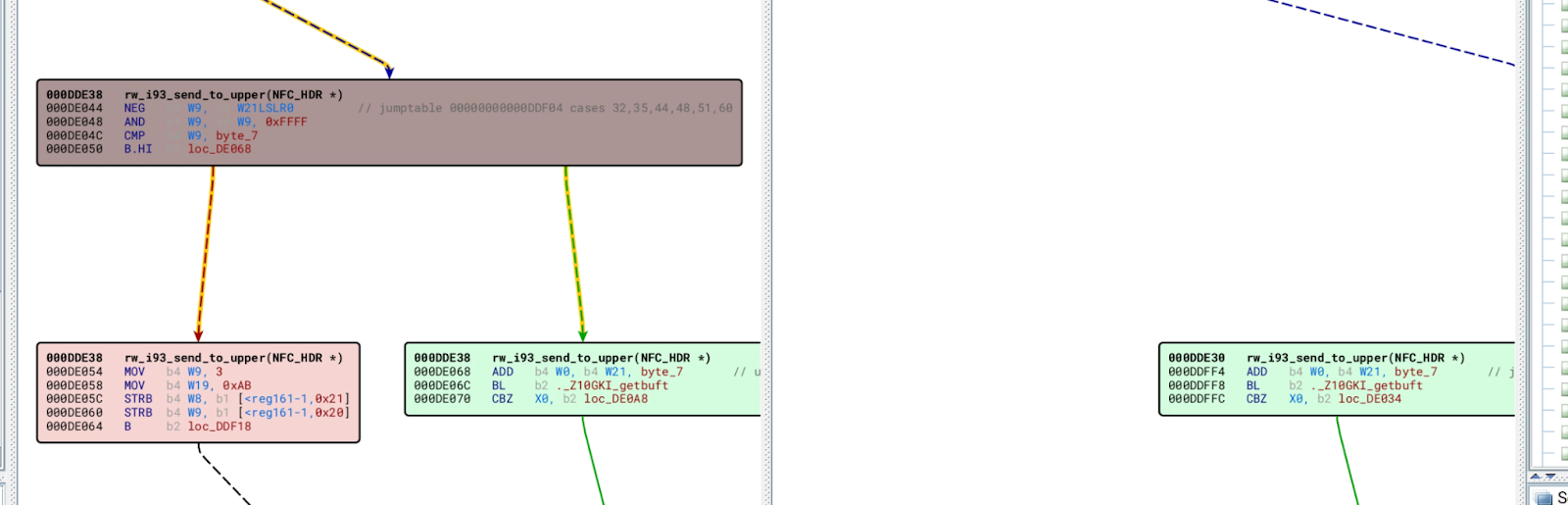
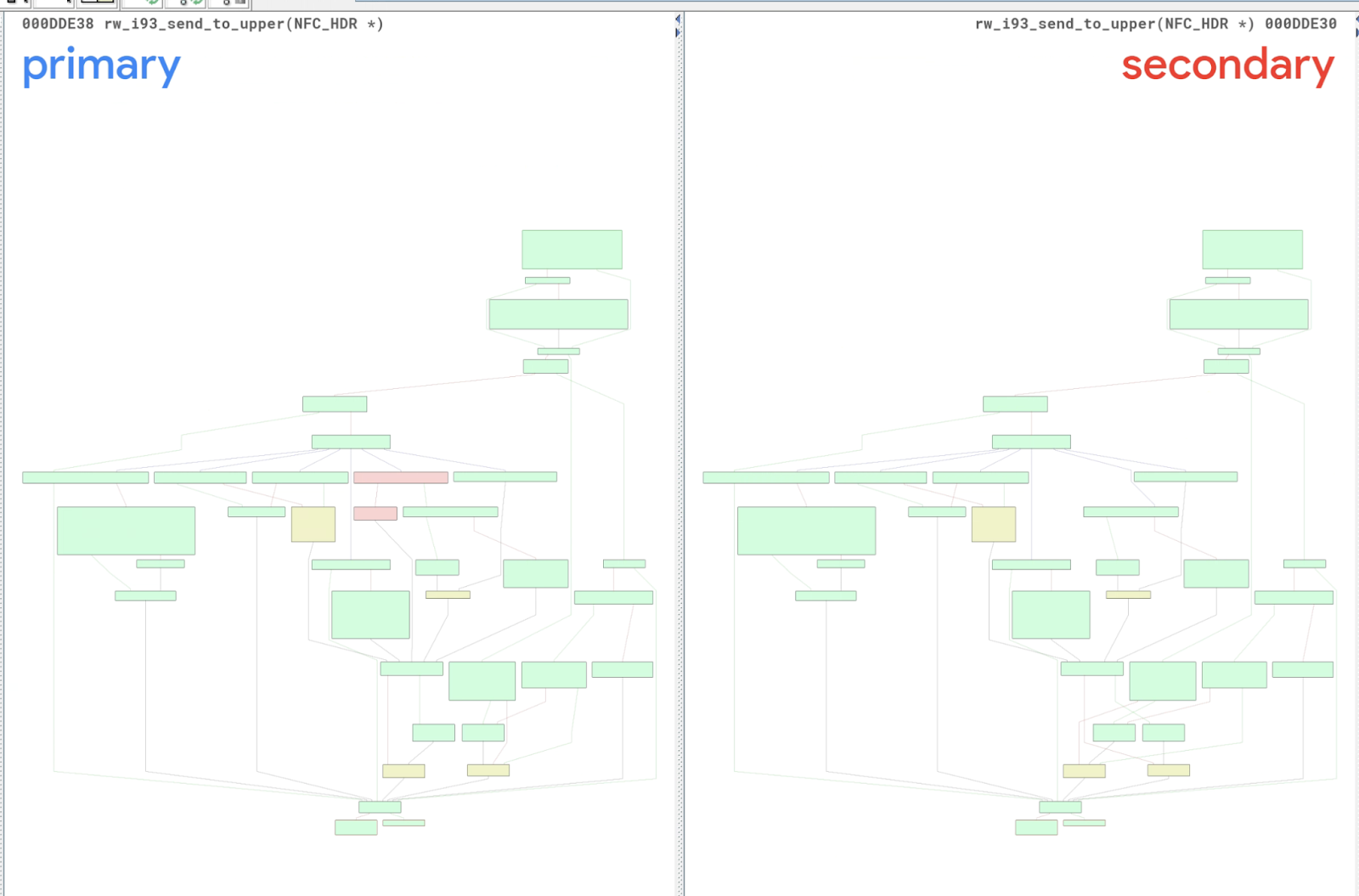
BinDiff is a comparison tool for binary files that allow researchers and engineers to quickly find differences and similarities in assembly code. In this example, BinDiff can identify the vulnerable function, but determining if the differences are a result of security patch on assembly code is non-trivial. Specifically, BinDiff shows two added basic blocks and four changed basic blocks. The first basic block uses the and operator for W9 and 0xFFFF, and compare the result with 7. Users need to have enough expert knowledge to understand that the assembly code is trying to check if W9 is larger than 7.
BinDiff takes about 10 seconds to produce to the result.
Diaphora Result
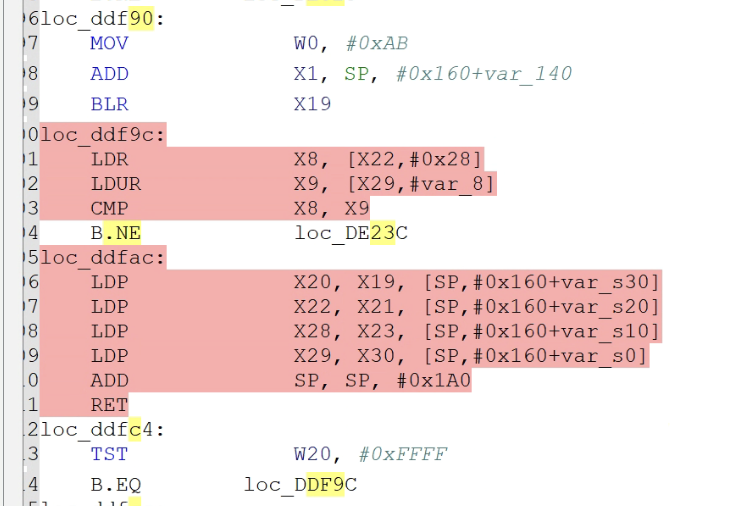
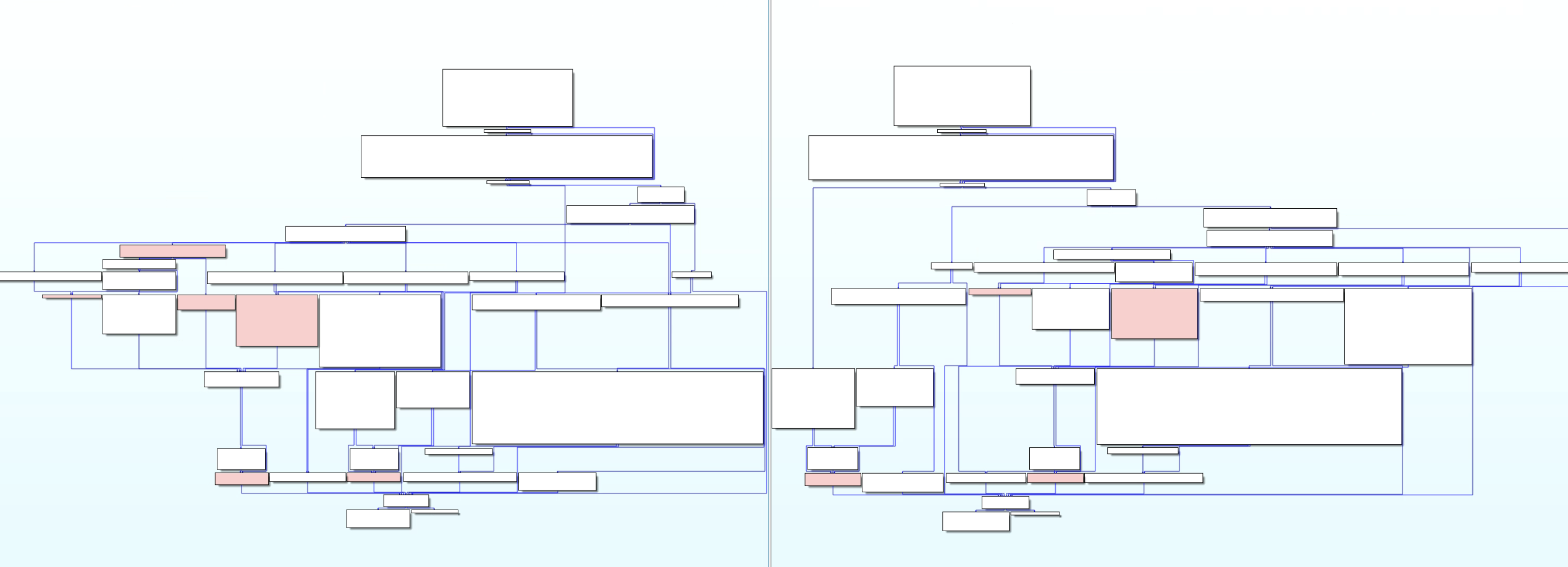
Similar to BinDiff, Diaphora is able to find the vulnerable function, and it shows that six basic blocks have been updated. However, the diff view of Diaphora is not so clear, thus determining if the new basic blocks are created by the security patch is also non-trivial.
Diaphora takes about 2 minutes to produce the result.
Example 2: Bluetooth CVE-2023-21273
DeepDiff Analysis
In a separate analysis of the Bluetooth stack, DeepDiff successfully detected patch-related modifications. The newly introduced strings and conditional checks are strong indicators that the code changes are a result of the security patch. Decompiled code and the corresponding analysis make this clear and easy to understand.
BinDiff Result
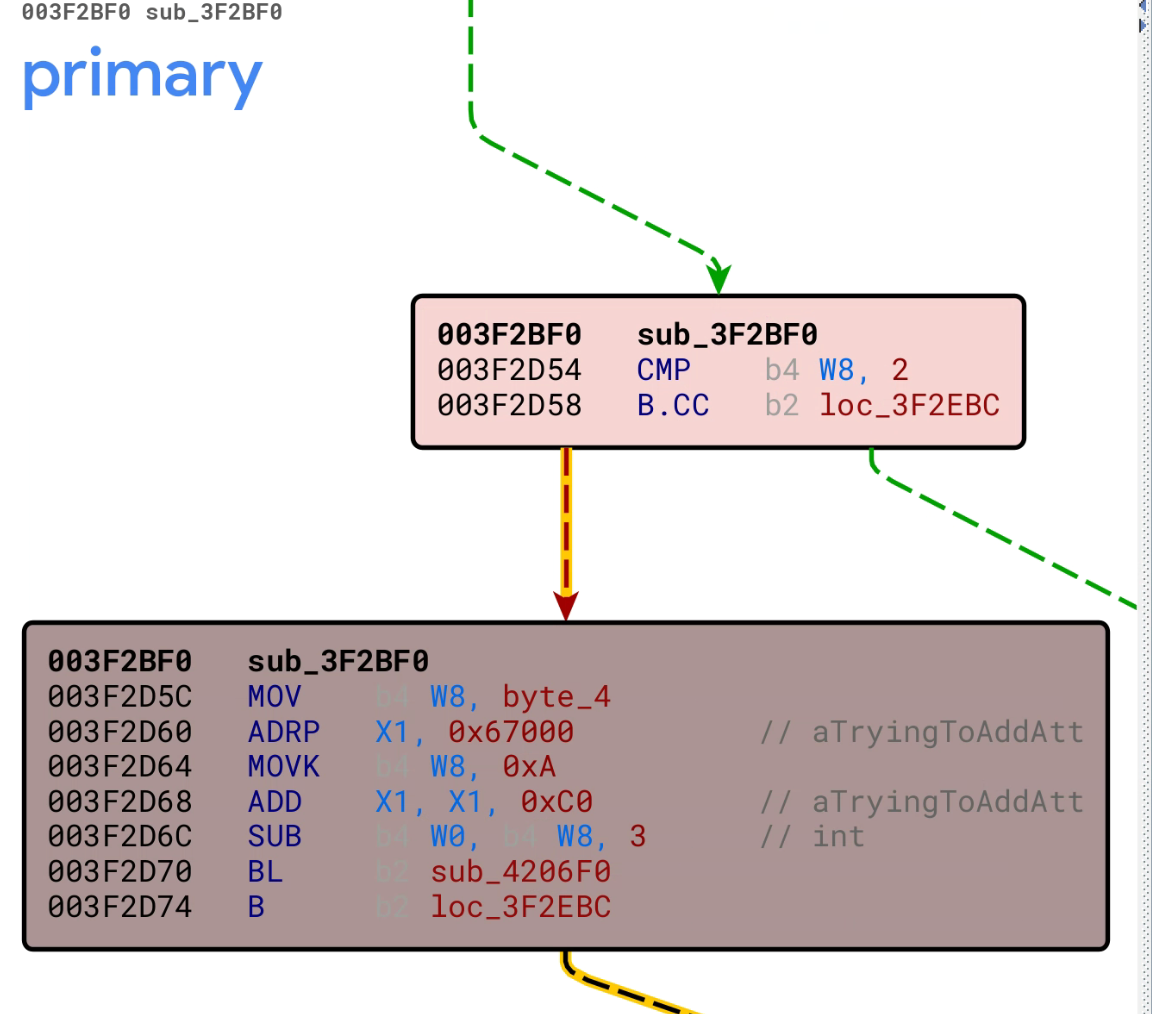
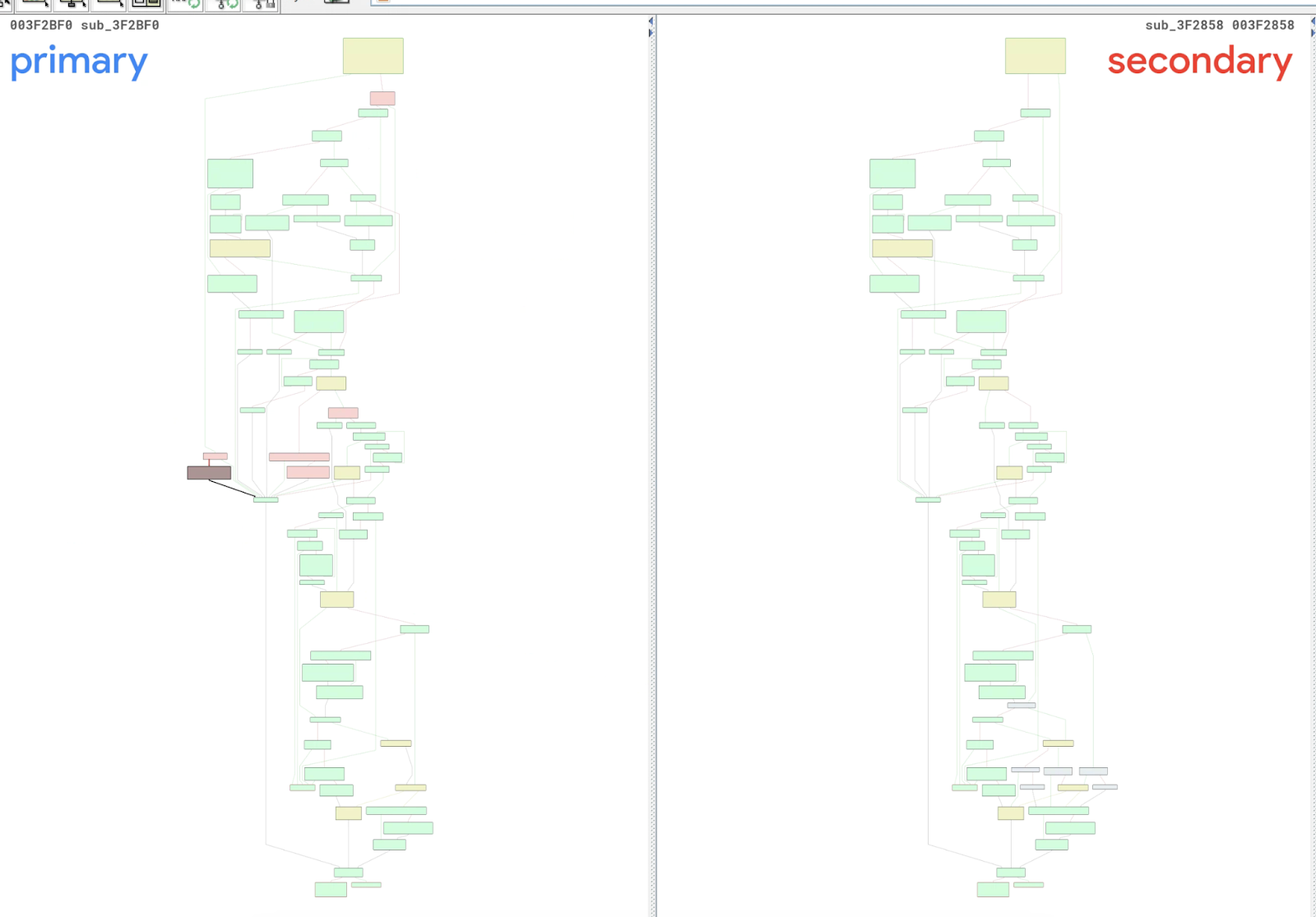
BinDiff again can identify the vulnerable code, but its assembly-level diffing view makes it difficult to ensure if the patch has been applied. There are too many change sites.
Diaphora Result
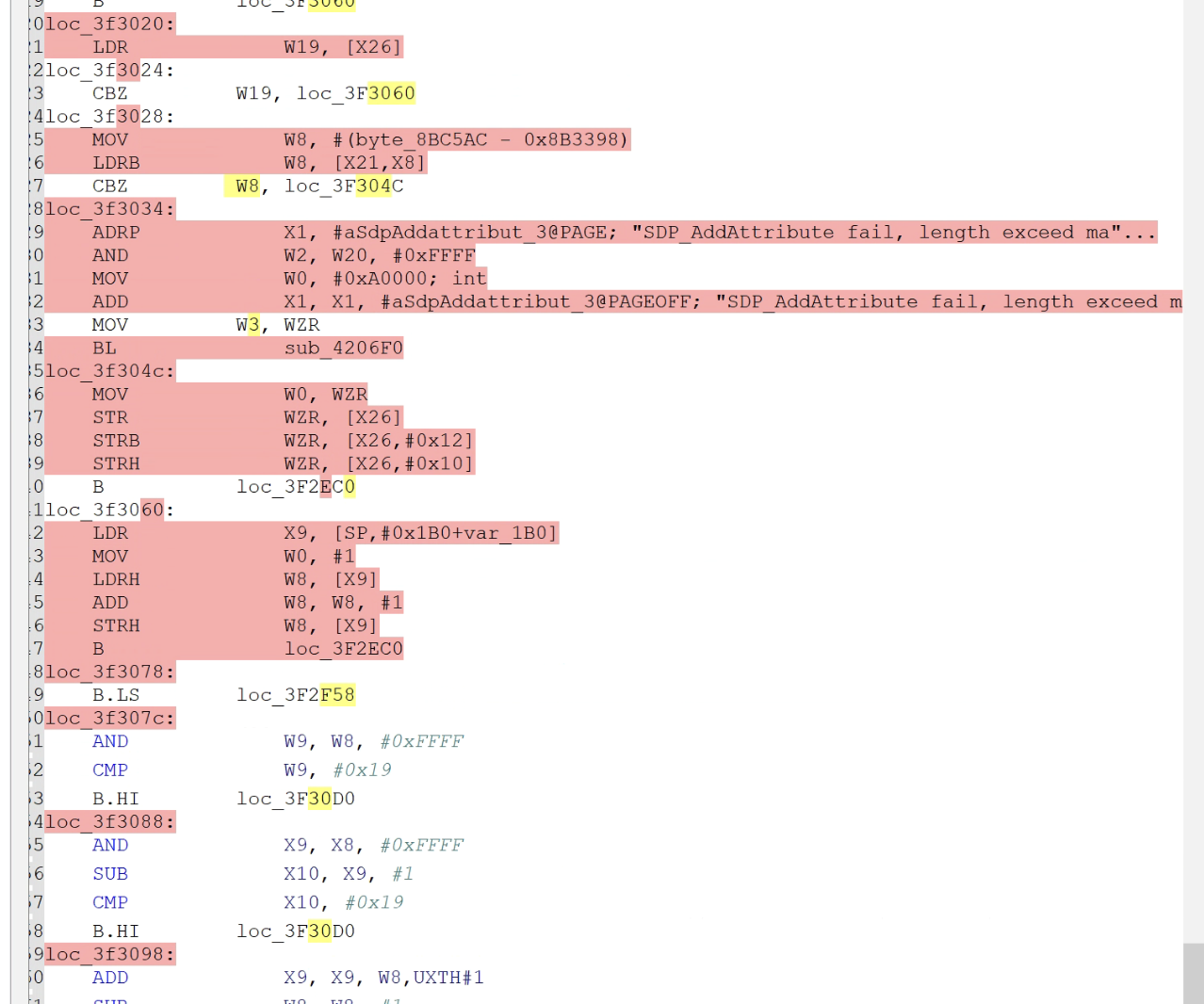
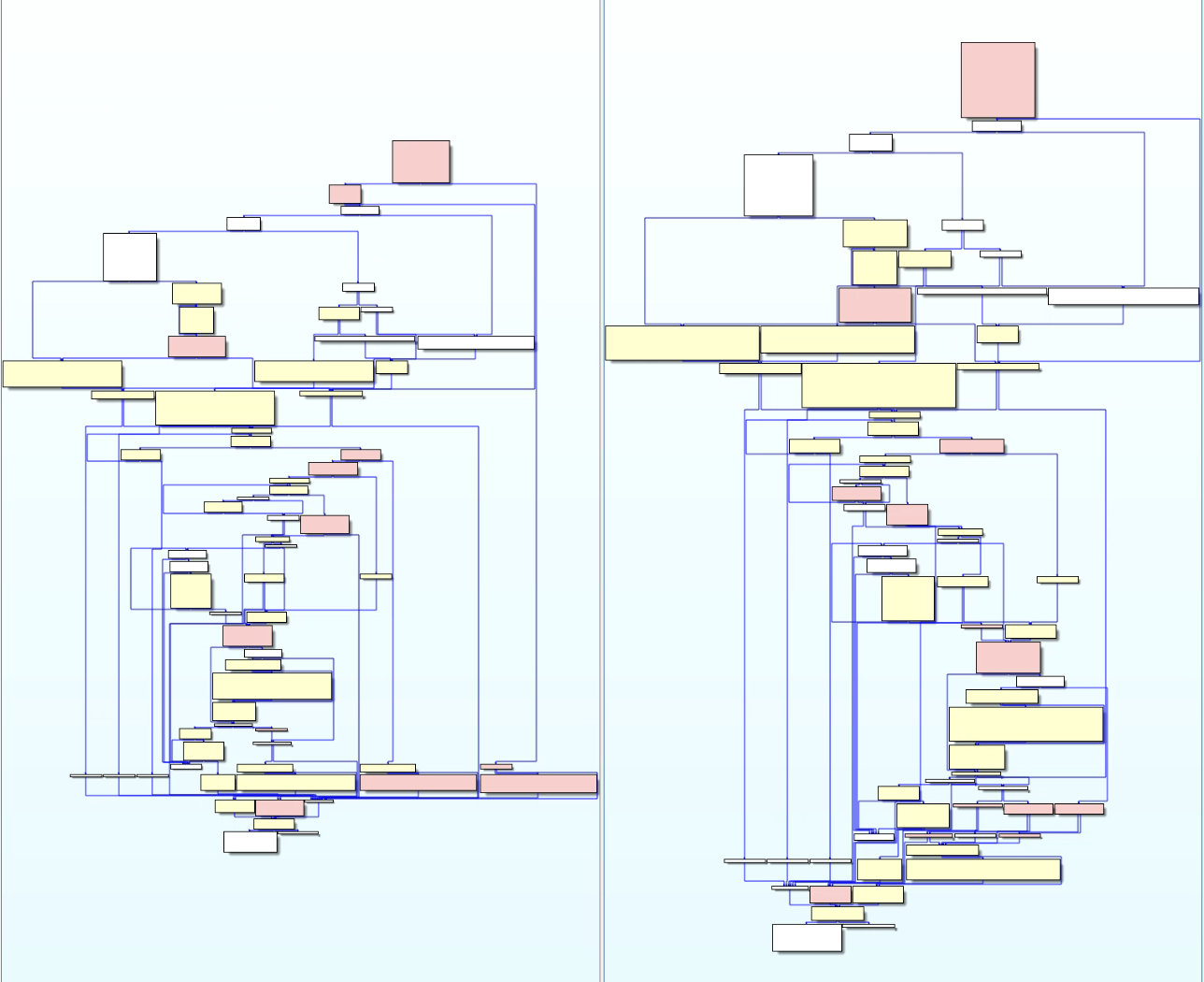
Similar to BinDiff, Diaphora highlights too many changes, and many are unrelated to the security patch. This makes average users determine the presence of a patch very challenging.
Getting Started with DeepDiff
DeepDiff is available now for enterprise deployment. To experience the power of DeepDiff for yourself:
- Request a demo at sales@deepbits.com
- Contact our sales team to discuss licensing options tailored to your organization's needs
Conclusion: The Future of Binary Security Analysis
With DeepDiff, Deepbits is proud to offer a solution that addresses one of the most persistent challenges in software security. By enabling precise, efficient identification of vulnerable functions across binary files, we're empowering organizations to protect their assets, their customers, and their reputations in an increasingly complex threat landscape.
Stay tuned for more updates as we continue to enhance DeepDiff with additional capabilities based on customer feedback and evolving security requirements.
References
Footnotes
Found this useful? Share it.